

Shaping fiber: how dry-molding technology works
In rigid packaging, dry-molding offers a different route from traditional wet-forming processes.
The difference starts with the process itself: fibre is shaped through heat and pressure, without the water-forming and subsequent drying stages used in wet-molding. This results in a different production setup, with very short forming cycles.
The dry-molding process
Dry-molding, or dry thermoforming, is an industrial process used to shape fibrous materials – such as cellulose-based airlaid – nto three-dimensional forms through the combined action of heat and pressure, without the water-forming stage typical of wet-molding processes.
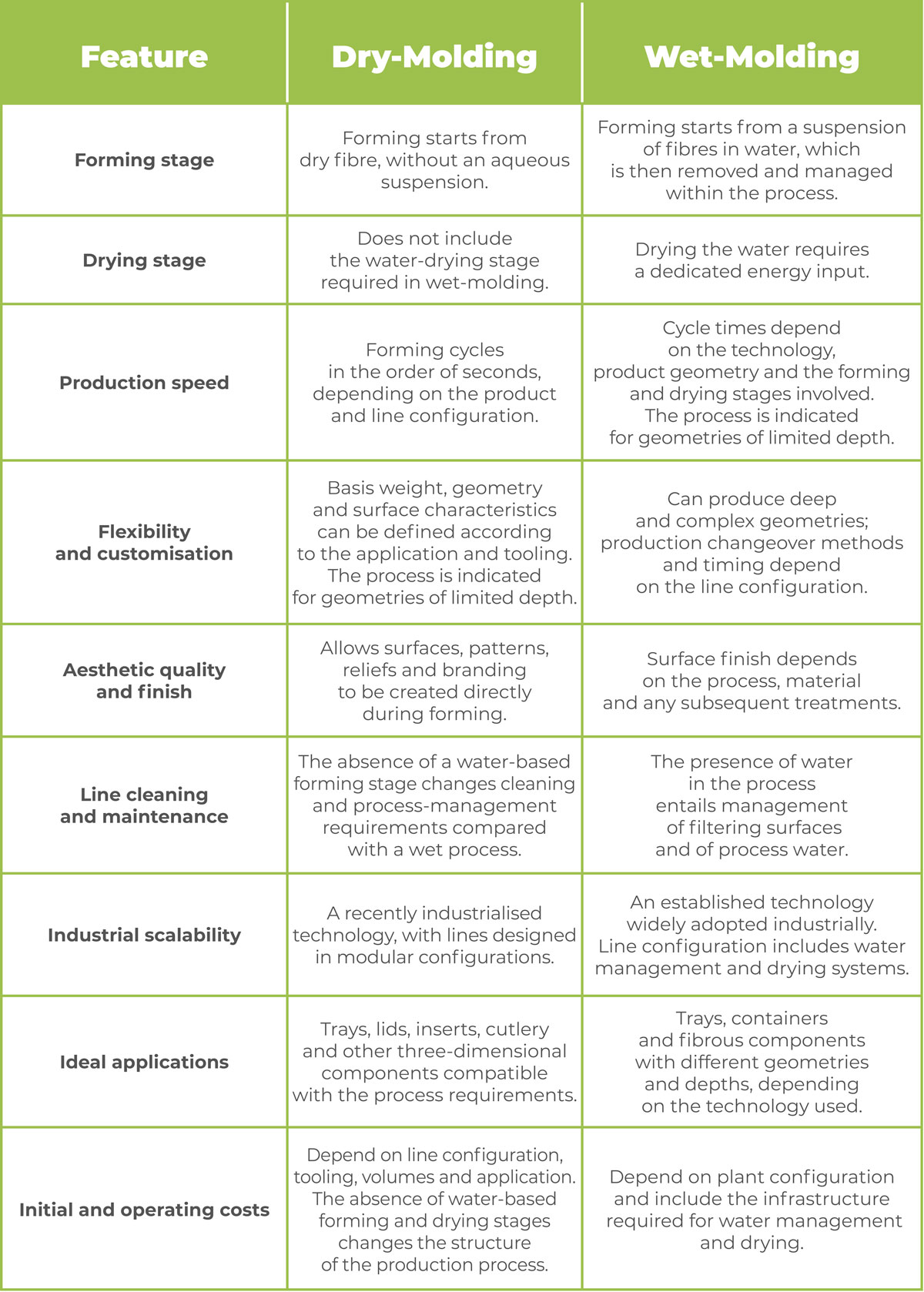
By comparison, wet-molding disperses fibres in water before forming and subsequent drying. Dry-molding processes the fibrous material in a dry state and brings it to the required geometry using heat and pressure. In the industrial technologies currently available, this can enable production cycles of just a few seconds, depending on the product and line configuration.
Dry-molding vs wet-molding: two processes compared
A new generation of materials for dry-molding
To make this process possible, the material itself must be compatible with dry thermoforming and able to meet both production and application requirements.
This is the context in which PulpForm was developed: the thermoformable cellulose-based airlaid created by Magic. PulpForm is a semi-finished material certified OK Compost Industrial for industrial composting, developed specifically for processing through dry-molding. It is thermoformed and, depending on the application, may undergo further converting, which determines the characteristics of the finished article.
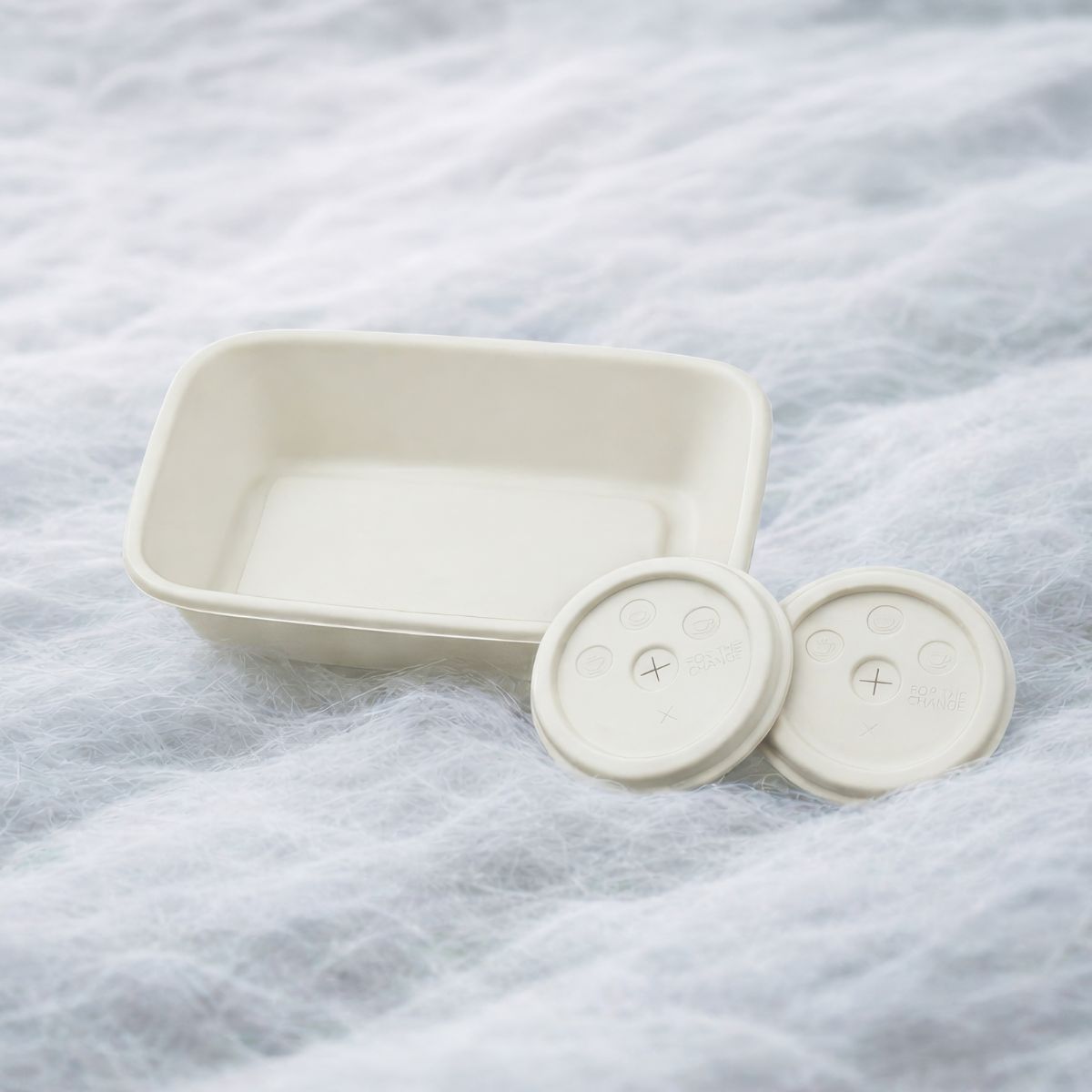
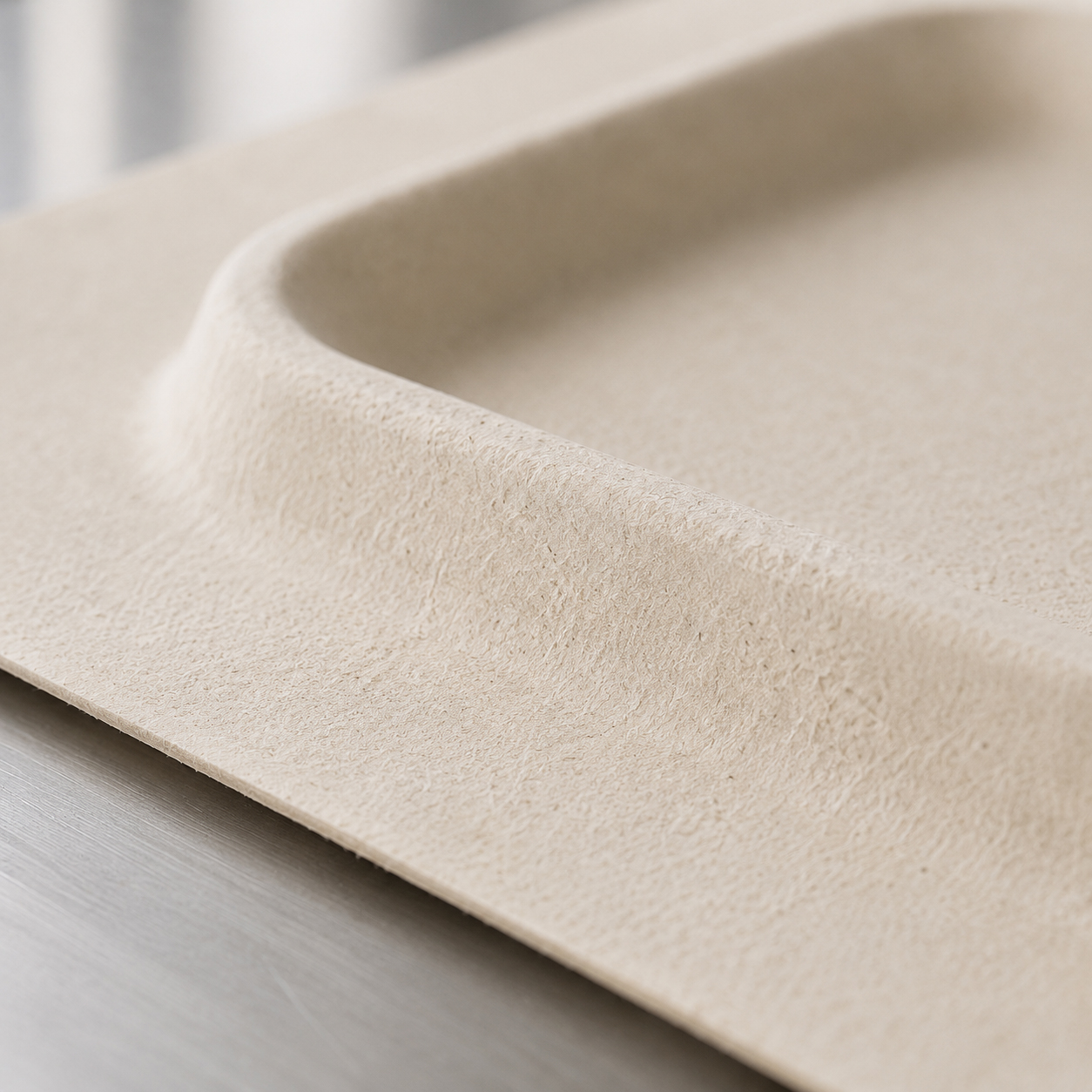
Used to produce trays, lids, inserts and other rigid packaging components, it combines the characteristics of a fibrous structure with the shaping possibilities offered by the dry process, allowing geometry, surface and finish to be tailored to the application.
Dry-molding technology: a different process for fibre-based packaging
Dry-molding changes the way fibre is transformed: it removes the water-forming and subsequent drying stages and uses heat and pressure to produce the finished component.
PulpForm was developed to work within this process and transform airlaid into three-dimensional forms for rigid packaging.
Material and process come together, and fibre take shape. Dry.