


When fibre enters premium packaging: thermoformed airlaid for cosmetics
In high-end cosmetic packaging, material is as much a part of the design as form. Surface, texture, geometry and finish all contribute to how the product is perceived, even before the pack is opened.
Dry-molding introduces a specific design opportunity in this field: shaping fibrous materials through heat and pressure, without the water-forming stages typical of wet-molding processes.
Designing fibre for dry-molding
Dry-forming is still a relatively uncommon industrial technology in Europe and requires materials developed to perform under the specific conditions of the process.
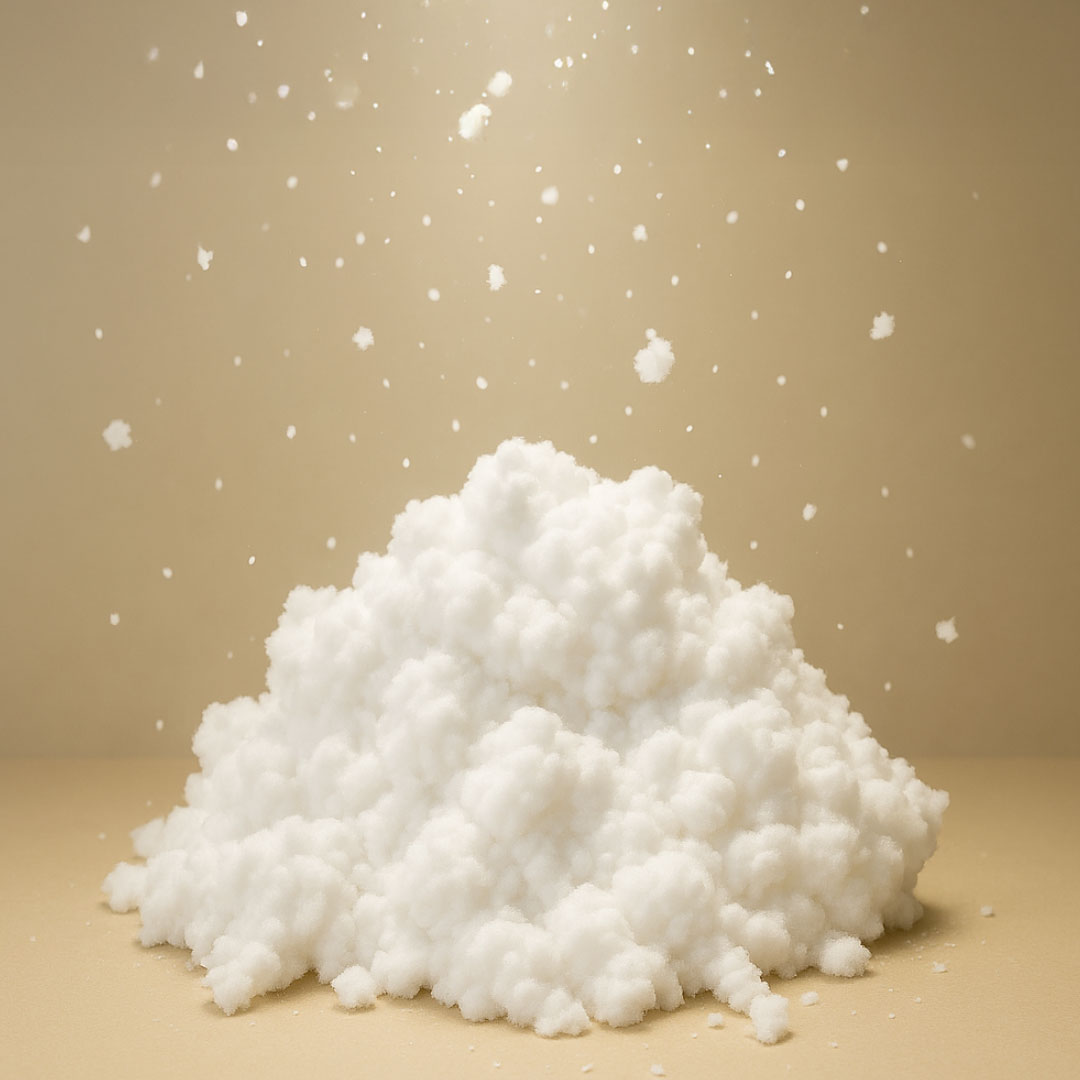
Magic has installed a dedicated airlaid production line and developed PulpForm, a material designed for dry-molding and OK Compost Industrial certified in the configurations covered by the relevant certificate.
PulpForm’s structure is designed to provide stability during conversion, formability under heat and pressure, and compatibility with industrial dry-molding processes.
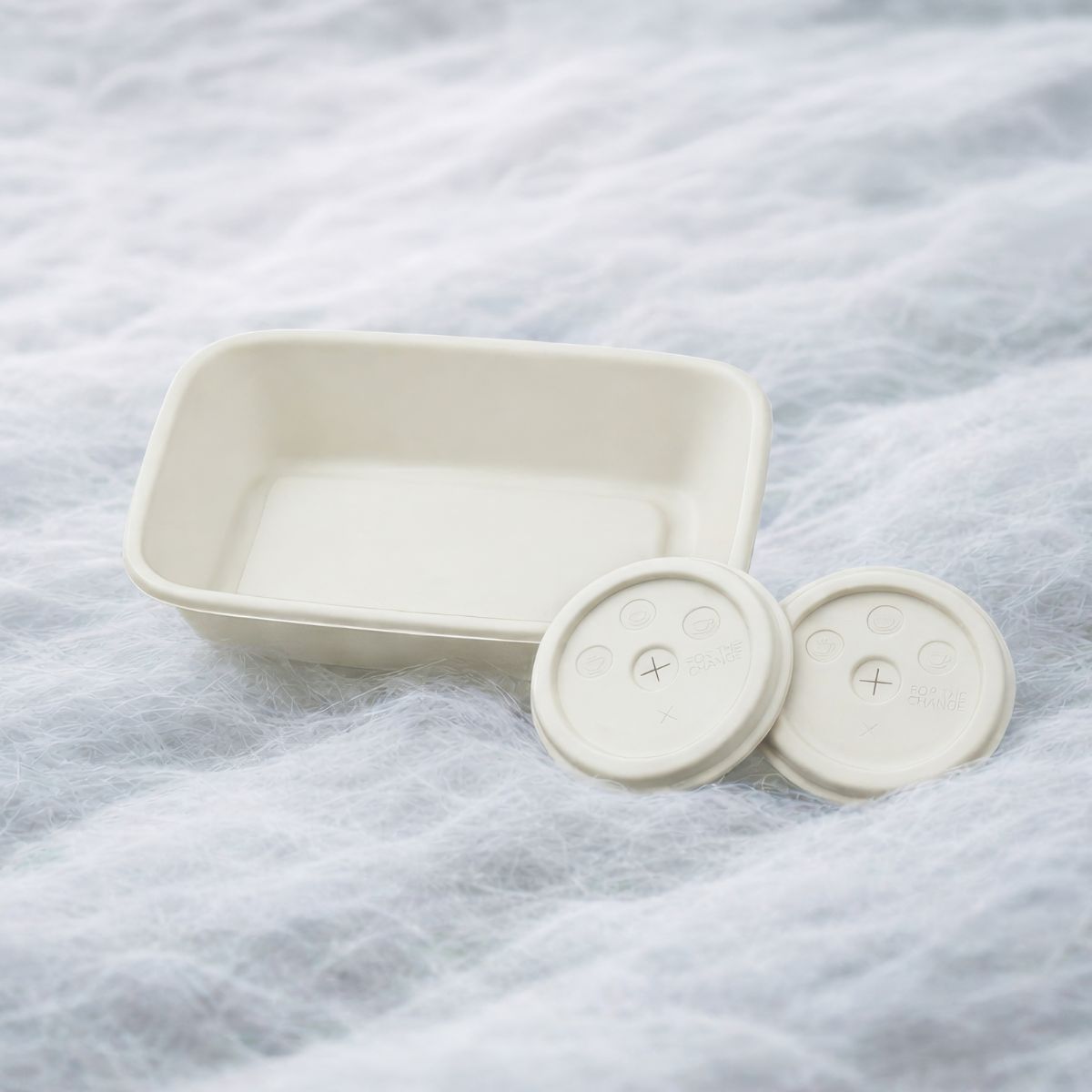
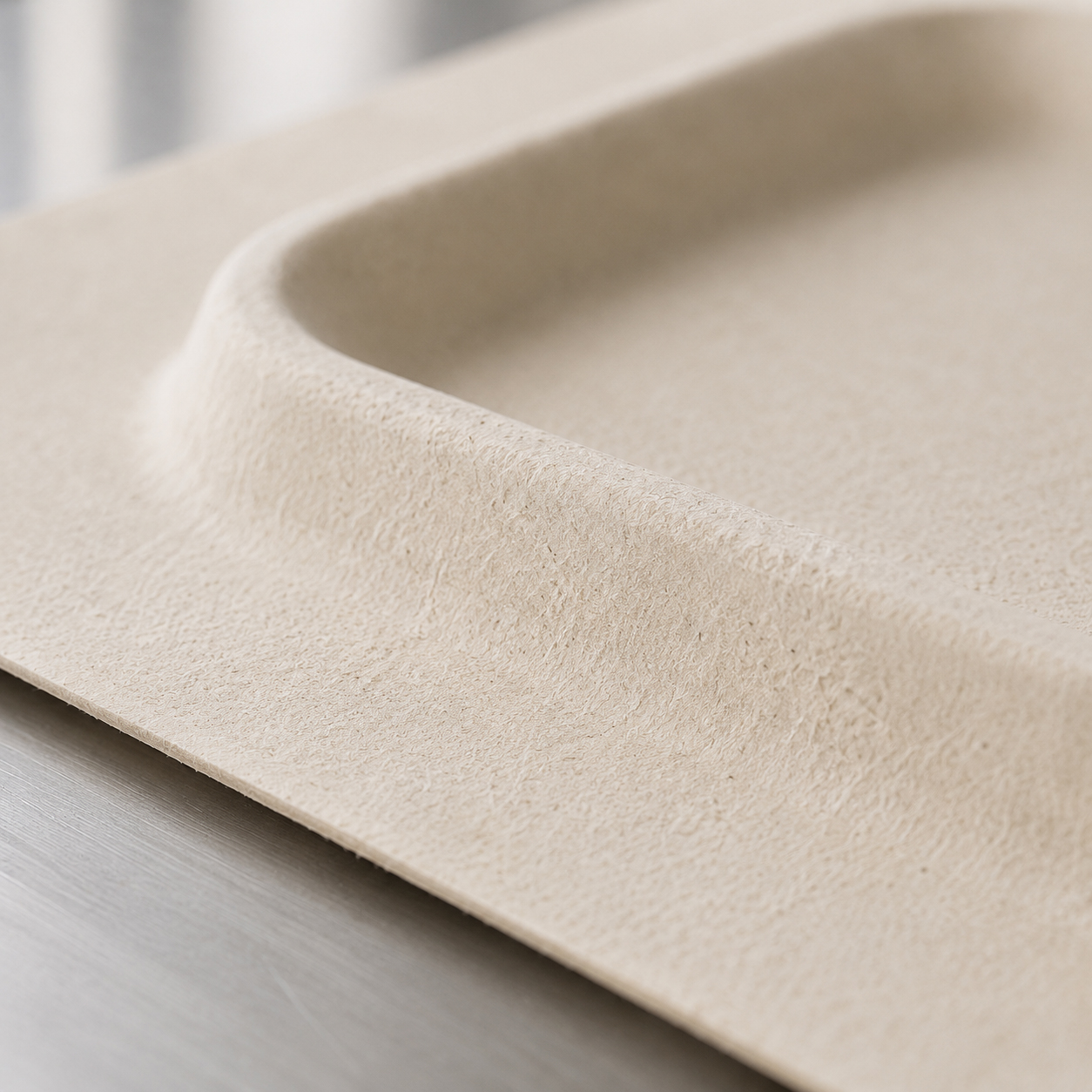
These properties make it possible to create three-dimensional components with defined geometries and to work directly on the material surface through embossing, textures, integrated logos and different finishes.
In cosmetic packaging, this opens up an interesting design space: rather than being covered or hidden, the material itself can become part of the pack’s visual identity.
Packaging is part of the brand experience
In the premium segment, the feel of the packaging also contributes to the overall perception of the product.
Dry-formed fibre makes it possible to work with surfaces, reliefs and tactile properties while preserving the recognisable character of the fibrous material. Colour, texture and geometry can therefore be developed together around the needs of the specific design.
For beauty applications, dry-molding can offer an alternative to thermoformed or flocked plastic components where dimensional, mechanical and surface requirements are compatible with the intended use.
Where greater moisture protection is required, the structure can be combined with specific coatings selected according to the conditions of use and the performance required.
Towards a more material-driven beauty
In high-end cosmetic packaging, fibre is finding its way into applications where form and finish play an increasingly visible role.
Dry-molding makes it possible to shape fibre through heat and pressure, avoiding the water-management stages associated with wet-molding and opening up new possibilities for inserts and three-dimensional components.
With PulpForm, airlaid becomes a material that can be designed not only for its structure, but also for the form it is intended to take.