

Getting to know bio-based, biodegradable, and compostable materials
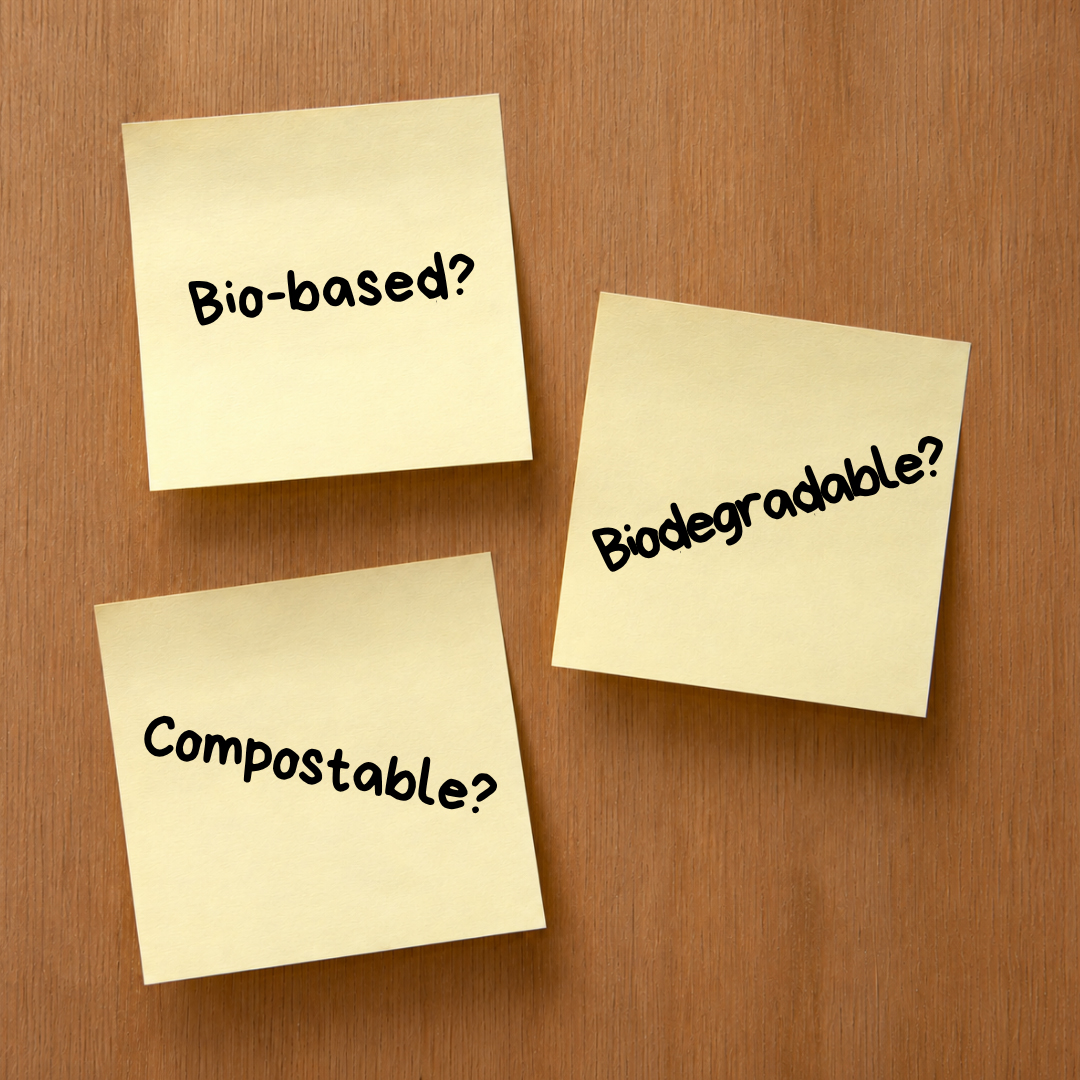
Bio-based, biodegradable and compostable describe different material properties and are not interchangeable terms.
Although they are often confused, these terms refer to distinct aspects of a material: where it comes from, how it behaves after use, or both. In food packaging, understanding these differences is also important when assessing the available end-of-life options.
Packaging has to protect the food it contains, while its composition and the way it is expected to be managed after use also need to be considered at the design stage.
Understanding each category helps clarify what these terms actually tell us about a material — and what they do not.
What is a bio-based material?
Bio-based materials are derived wholly or partly from biomass, including sources such as starch, corn, sugar cane or cellulose. What distinguishes them from fossil-based materials is therefore the origin, complete or partial, of the raw materials used.
Bioplastics are among the best-known materials in this category. A bio-based material, however, is not necessarily biodegradable. The term bio-based refers to the origin of the raw material and, on its own, does not define the material’s overall environmental characteristics or determine what should happen to it at the end of its life.
What is a biodegradable material?
A material is biodegradable when microorganisms can break it down through biological processes into simpler substances such as carbon dioxide, water, mineral salts and biomass. Under anaerobic conditions, methane may also be produced.
How and how quickly biodegradation takes place depends on both the properties of the material and the conditions of the environment in which degradation occurs. Temperature, moisture, the presence of microorganisms and the availability of oxygen are therefore all relevant.
For this reason, describing a material as biodegradable does not in itself indicate where, under which conditions or within what timeframe biodegradation will take place.
Biodegradability should also not be interpreted as meaning that a material can be released into the environment without consequences. Appropriate end-of-life management remains necessary.
A compostable material is biodegradable, but not every biodegradable material meets the requirements for compostability.
What is a compostable material?
Compostable materials are a specific category of biodegradable materials designed to break down under defined composting conditions.
For packaging to be considered industrially compostable according to the relevant European standard, it must meet specific requirements covering biodegradation, disintegration during the composting process, limits on certain substances and the absence of negative effects on compost quality.
Under EN 13432, the assessment includes a biodegradation requirement of at least 90% within six months and a disintegration test carried out over 12 weeks.
Industrial composting takes place under controlled conditions that differ significantly from those found in the open environment or in home composting. This distinction is important: a material certified for industrial composting should not automatically be assumed to be suitable for home composting or to biodegrade rapidly in other environments. The European Commission also distinguishes industrial compostability from biodegradation under other conditions.
The composting process produces stabilised organic material that, when it meets the applicable quality requirements, can be used to improve soil.
Materials certified for industrial composting can be disposed of with organic waste where this is permitted by local regulations and the collection system in place.
Understanding the differences between bio-based, biodegradable and compostable materials is important when selecting a material for a specific application and intended end-of-life route.
All compostable materials are biodegradable, but not all biodegradable materials are compostable. Similarly, a bio-based material may be biodegradable or non-biodegradable: the origin of its raw materials does not determine its behaviour at the end of life.
This distinction is also explicitly recognised in the European policy framework for bio-based, biodegradable and compostable plastics.
The appropriate material therefore depends on the requirements of the application, including the performance expected during use and the way the product is intended to be managed afterwards.
In food packaging, raw material origin, performance during use and the intended end-of-life route should therefore be considered separately. Keeping these aspects distinct helps avoid misleading equivalences between bio-based, biodegradable and compostable, while allowing the characteristics of the packaging to be communicated more precisely.