


Food packaging: compostable or recyclable? It depends on the application
When different packaging options are compared, the discussion often tends to be reduced to very clear-cut categories: paper or plastic, compostable or recyclable, mono-material or multi-material.
These distinctions matter, but they are not enough to guide an industrial choice. In food packaging, a material needs to be assessed in relation to its function within the pack, the production process in which it will be used and the way it is expected to be managed after use.
For fresh food producers and packers, integration into the packaging line also has practical implications. A component that is difficult to handle, poorly compatible with the rest of the packaging or accompanied by unclear disposal instructions may end up making the process more complicated rather than simpler.
Materials and processes need to be assessed together
Packaging cannot be evaluated on the basis of the material alone. The pack must perform its function without introducing additional issues into the production process or waste management.
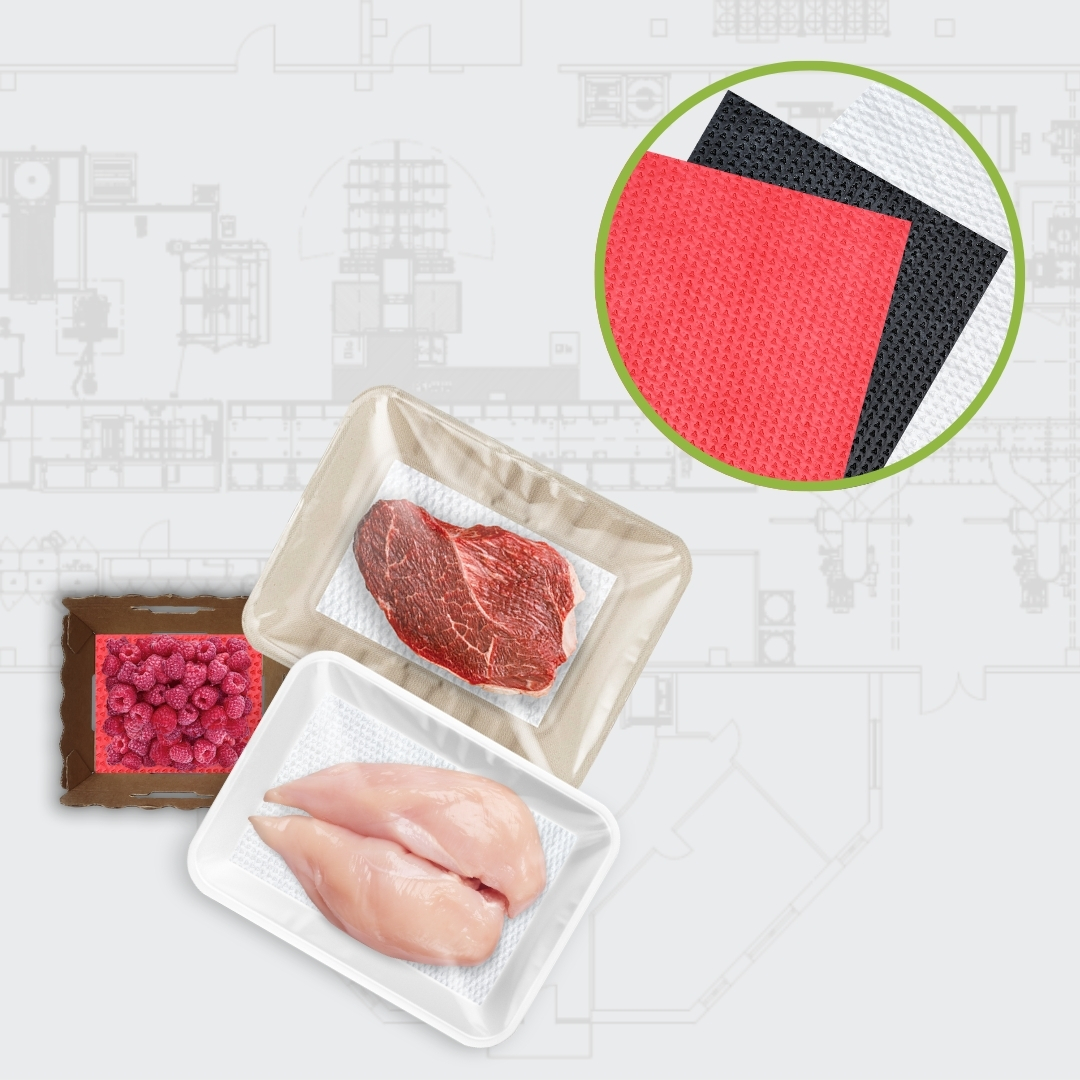
In the case of absorbent pads for fresh food, this means managing the liquids released by the product, keeping the pack stable and helping maintain a clean presentation on shelf.
The pad affects the overall quality of the pack and the way it is perceived by consumers. Its design therefore needs to consider absorbency, integration into the packaging line and compatibility with the intended management after use.
Compostable and recyclable with paper: it depends on end of life
Compostability and recyclability can address different needs, depending on the application and the packaging configuration.
Certified compostable materials can be used in applications where, after use, the component is intended for the organic waste stream, where this is permitted by local regulations and the collection system in place.
This may apply, for example, to components that remain in contact with food residues and are intended to be managed together with the organic fraction.
Solutions assessed as recyclable with paper, on the other hand, are intended for applications where the component can be managed within the relevant recycling stream. In this case, the composition of the pad and its compatibility with the rest of the packaging become central considerations.
Magic’s work on compostable and mono-material food pads
Magic develops absorbent pads certified for industrial composting and pads assessed as recyclable with paper.
The starting point is the application. For each solution, we consider how the food behaves inside the tray, the requirements of the packaging line and the intended management of the component after use.
In packaging design, there is no solution that is valid in the abstract. Each option needs to be assessed in relation to the product’s function, the industrial process and the collection system in which the packaging will be managed.