


The evolution of food packaging over time
Preserving food and being able to transport it: the earliest forms of packaging responded to very practical needs. Over time, materials changed, production and distribution systems developed, and the functions assigned to packaging changed with them.
Looking back at this history helps us understand how today’s packs came about and why their design now has to take many different factors into account.
From early containers to industrial production
Long before packaging existed as we know it today, people used the materials available to them to contain and transport food: vessels made from natural materials, animal skins, shells and pottery containers.
In ancient times, amphorae were widely used throughout the Mediterranean to store and transport products such as olive oil, wine and grain.
Over the centuries, new materials and manufacturing techniques emerged. Between the 17th and 19th centuries, early forms of paper and board packaging also developed, becoming more widespread as production moved towards industrial scale.
New materials, new possibilities
Industrial production profoundly changed the way food was packaged.
Glass became increasingly common for bottles and jars, while metal containers opened up new possibilities for preserving and transporting a wide range of food products.
Cellophane arrived in the early 20th century. Made from cellulose, this transparent material made it possible to wrap products in a flexible film, introducing a different way of packaging food while allowing consumers to see what was inside.
Each new material brought its own properties and made possible applications that had previously been difficult to achieve.
How mass consumption changed packaging
After the Second World War, the growth of industrial production and large-scale distribution changed packaging requirements once again.
Plastic and aluminium became increasingly widespread. Their light weight, ability to be formed into different shapes and structures, and suitability for industrial processes contributed to their use across many applications.
The role of the pack was changing too. Alongside protecting and preserving the product, packaging provided space for information, images and brand identity. As large-scale retail expanded, the pack also became an important means of communication between the product and the consumer.
Design, usability and performance
As the range of products and formats available increased, packaging design gradually came to involve much more than the choice of a container.
Shape, opening and closing systems, ease of use, portioning, transport and product presentation all became part of the design process. At the same time, materials and structures still had to deliver the performance required by the food and by the conditions in which it would be stored and distributed.
Contemporary packaging reflects requirements that have accumulated over time. Some have remained largely unchanged, such as containing and protecting food. Others have emerged alongside new ways of producing, distributing and consuming it.
End of life as a part of packaging design
In recent years, greater attention has been paid to what happens to a pack once it has been used.
The amount of material used, the composition of the packaging and the possibilities for recycling or other forms of end-of-life treatment have become additional factors to consider during design.
Recyclability and compostability describe different characteristics and are not synonyms for a general environmental benefit. They depend on the composition of the product, the applicable requirements and the systems through which the material is collected and treated after use.
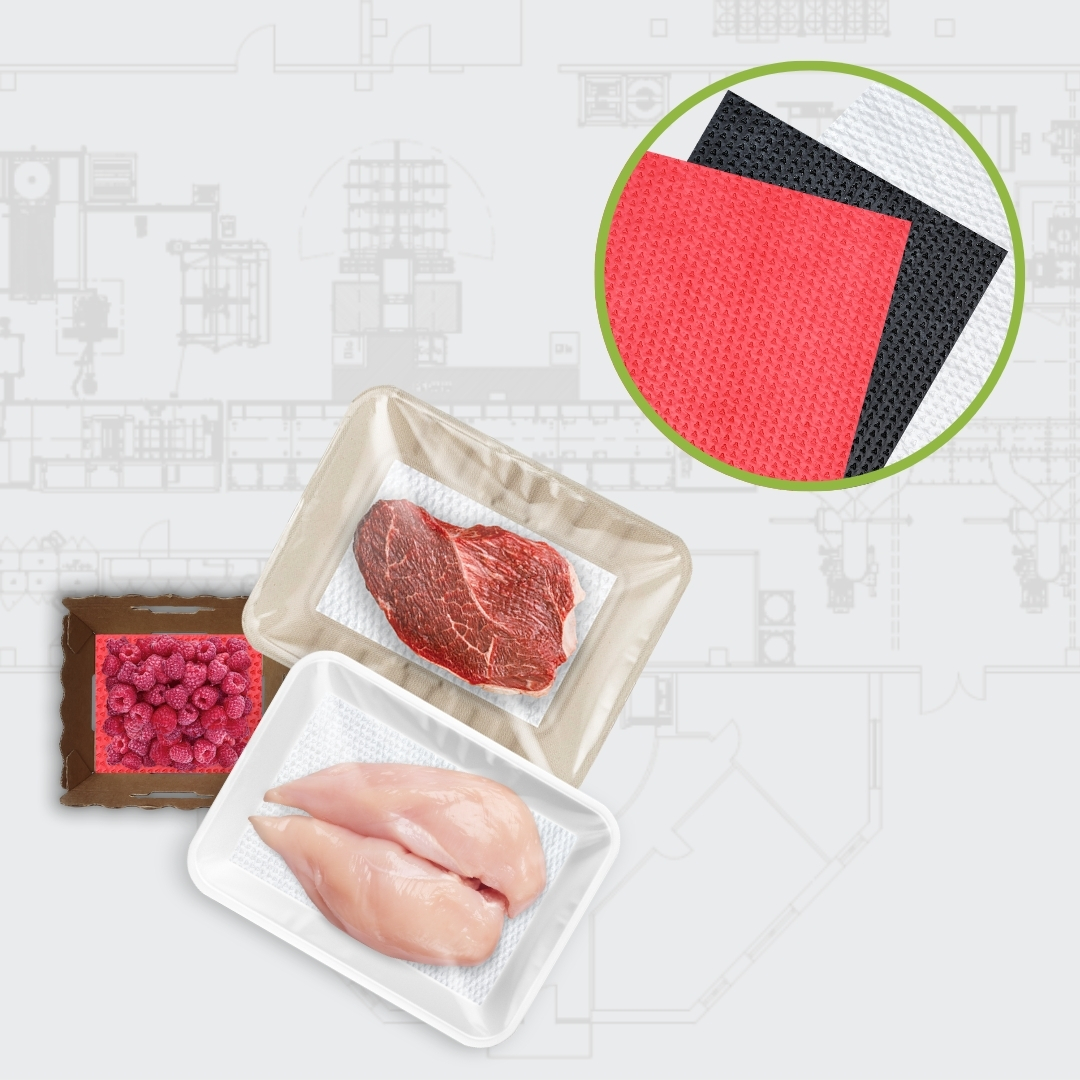
This also applies to individual packaging components. In fresh food packaging, for example, the tray, film, label and absorbent pad may have different materials and functions. Considering their composition helps determine how each element should be managed once it has completed its function.
Compostable materials: a characteristic that requires precision
Compostable materials are among the options currently available for certain packaging applications.
The term compostable, however, needs to be used precisely. It refers to the ability of a material or product to undergo a composting process under specified conditions and according to defined requirements. On its own, it does not mean that a material can be described generically as “eco-friendly” or “sustainable”.
For industrial composting, the characteristic must be referred to the conditions required by that specific process. Where a certification is communicated, the claim must also remain within the scope of the products or configurations covered by the certificate.
Magic has developed materials and solutions for which specific industrial compostability certifications are available. In these cases, the certification and its scope determine what can be stated about the product.
A story that continues
From early containers to today’s multi-component packs, packaging has changed along with the way food is produced, stored, distributed and purchased.
Its original purpose, however, remains the same: to contain and protect the food we eat. Over time, new requirements, materials and design considerations have been added around this fundamental function.
Today, what happens after use is also part of the assessment. As with performance during use, there is no single solution that works for every pack. The material, structure, application and actual end-of-life conditions all need to be considered.