

What is the difference between biodegradable and compostable?
When discussing materials and how they are managed at the end of their useful life, consumers often confuse the terms compostable and biodegradable, assuming they mean the same thing.
So what is the difference between them?
Biodegradable
Biodegradable materials are materials that, under specific conditions, can be broken down by microorganisms into simpler substances. The time required and the way this process takes place also depend on the environment in which biodegradation occurs.
Under the European standard for industrially compostable packaging, biodegradation must reach at least 90% within six months. Under aerobic conditions, the process converts the material into carbon dioxide, water and biomass.
A material described as biodegradable is not necessarily compostable. If it is not certified as compostable, it should not automatically be disposed of with organic waste, but according to its composition and the applicable local collection rules.
Compostable
A compostable material is designed to biodegrade and disintegrate under the conditions specified for the relevant composting process. In industrial composting, treatment takes place in facilities operating under controlled conditions.
Compost is an organic material produced through the composting process and also used in agriculture. For a product to be certified as compostable, it must meet specific requirements covering, among other aspects, biodegradation, disintegration, ecotoxicity and heavy metal content.
Home composting takes place under different conditions from industrial composting: temperatures and process conditions are not the same, and a product certified exclusively for industrial composting is not automatically suitable for a home composting system.
Composting certifications


Reflecting the distinction between industrial and home composting, TÜV Austria issues two specific certifications:
- OK Compost Industrial
- OK Compost Home
OK Compost Industrial identifies products certified for composting in industrial facilities, while OK Compost Home applies to products suitable for home composting conditions as well.
Disposal instructions should always be checked against local regulations and the collection system in place.
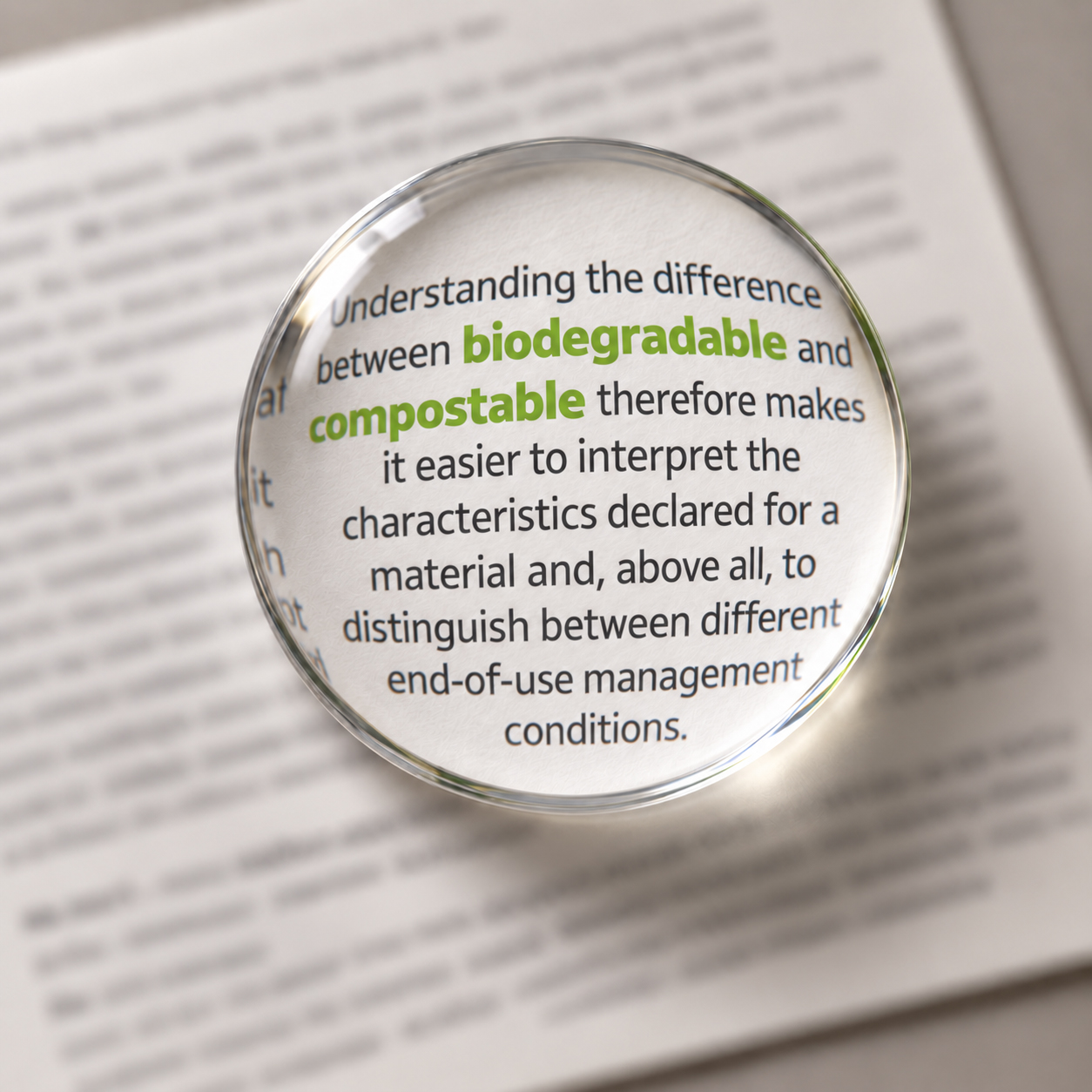
Understanding the difference between biodegradable and compostable therefore makes it easier to interpret the characteristics declared for a material and, above all, to distinguish between different end-of-use management conditions.
For certified materials, it is the certification itself — together with its specific scope — that indicates the conditions under which compostability has been verified.