

Absorbent pads for food packaging: a global outlook
The food packaging market is undergoing changes that involve materials, performance, regulatory requirements and consumer expectations. Absorbent pads used in packs of meat, poultry, fish and soft fruit are also part of this evolving landscape.
The Global Food Absorbent Pads Market Report 2023 identifies several trends affecting the sector, from growing attention to material characteristics and food waste reduction to technological innovation and regulatory compliance.
Materials and end-of-life characteristics
Among the themes highlighted by the report is a growing focus on environmental considerations and, in particular, on the materials used in packaging.
In the absorbent pad sector, this is reflected in the development of solutions with different characteristics, including products described as recyclable, biodegradable or compostable.
These terms refer to different properties and end-of-life routes and are not interchangeable. When applied to a specific product, they need to be supported by its technical characteristics and, where applicable, the relevant certifications.
Rather than referring generically to “eco-friendly” or “sustainable” products, it is therefore important to consider which materials make up the pad and which end-of-life characteristics can actually be documented.
The issue of food waste
The report also links developments in the absorbent pad market to the growing focus on food preservation and food waste reduction.
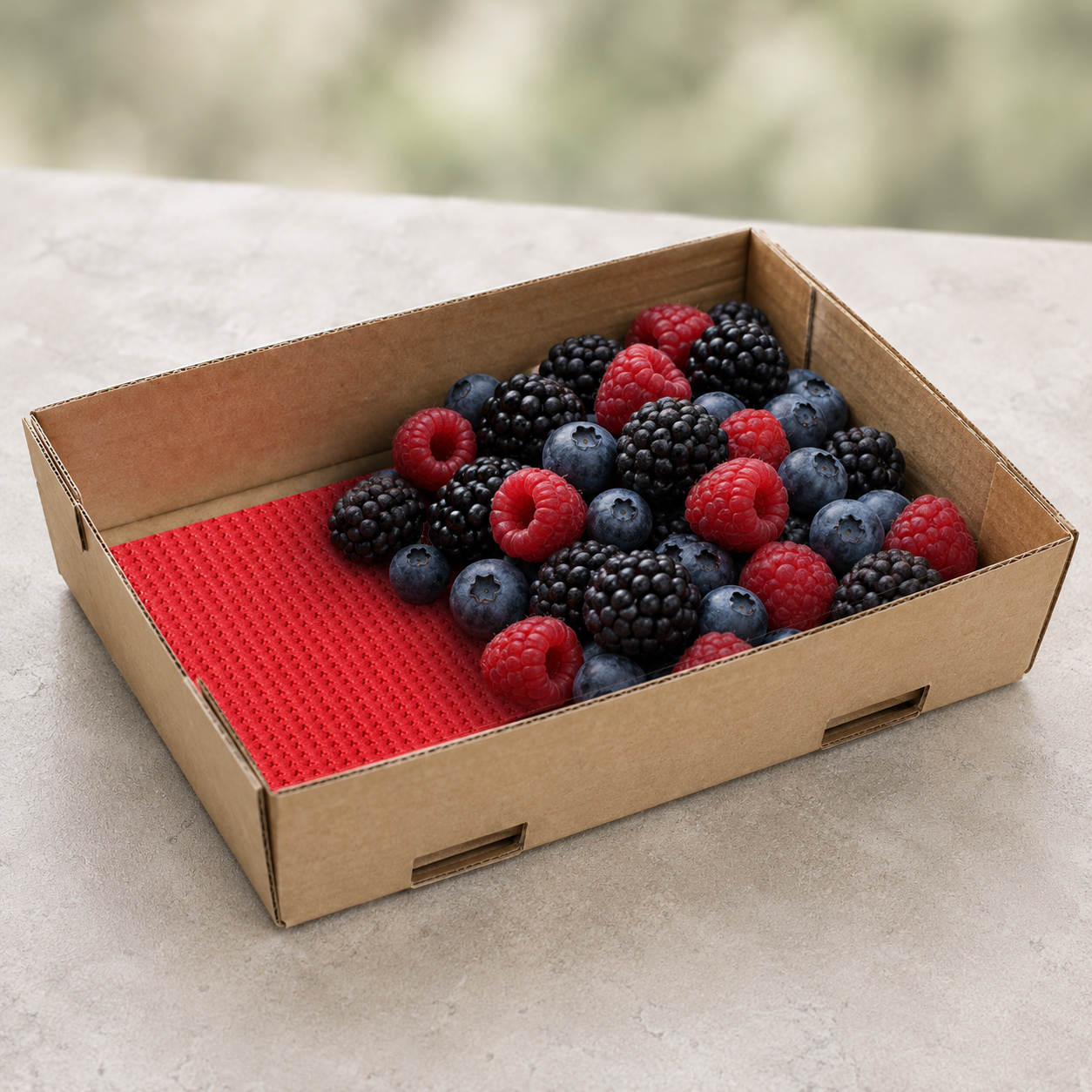
Inside the pack, the pad performs a specific function: absorbing liquids released by packaged fresh food and retaining them within its structure.
The relationship between liquid management and the shelf life of the food must, however, be assessed in the context of the specific application. Any effect on shelf life requires testing on the product and packaging under the relevant storage conditions.
The role of the pad should therefore be considered first and foremost in terms of its absorbent function, without automatically turning this into a general claim about food waste reduction.
Technological innovation
Another trend identified by the report is the development of new materials and solutions in response to market requirements.
Research in this field involves both absorbent performance and product composition. This includes the development of compostable pads, alongside materials designed to deliver specific absorption performance.
Here too, characteristics such as compostability need to be stated with reference to the applicable conditions and, where certification is available, to its specific scope.
Innovation therefore involves different aspects of the product, from absorption capacity to the choice and combination of the materials that make up its structure.
Regulatory compliance
Compliance with the regulations applicable to food packaging is another key consideration for the sector.
Absorbent pads intended for use in food packaging must meet the requirements applicable to their specific application. Verifying materials and product characteristics is therefore an essential part of operating in a regulated market where food safety and quality are fundamental requirements.
Regulatory compliance
Compliance with food packaging regulations is an increasing priority for the industry. Food safety and quality are at the top of consumers’ concerns and regulatory compliance is essential to ensure that food products are safe for consumption. In the food industry, where safety is a priority, absorbent pads must comply with strict food packaging regulations. This is essential to maintain consumer confidence and to operate successfully in this highly regulated sector.
Market challenges and opportunities
Despite the obvious progress and opportunities in the industry, it is important to also realise the challenges companies have to face. One of the main ones is continuous innovation: to be competitive, companies must invest in research and development to develop new technologies and advanced materials that meet the increased consumer expectations and evolving regulations.
Another significant challenge is the reduction of production costs. While sustainability is a central concern, companies must keep costs under
The report also highlights some of the challenges accompanying the development of the sector.
Developing new materials and technologies requires investment in research and development, while introducing new solutions also means addressing production costs and the need to remain competitive.
At the same time, growing attention to material composition, performance, end-of-life characteristics and food safety is broadening the range of parameters considered in product development.
For companies in the sector, the challenge is therefore to translate these requirements into technically verifiable solutions that are also compatible with industrial production.
An evolving market
The picture outlined by the Global Food Absorbent Pads Market Report 2023 is one of a sector in which different requirements converge: absorbent performance, material development, food preservation, regulatory requirements and costs.
Environmental characteristics are also part of this evolution, but they require precise language: recyclability, biodegradability and compostability are not interchangeable definitions and must be linked to the actual characteristics of the solution concerned.
Source: Global food absorbent pads market report 2023